A website where every location pulls its weight
Running several locations means every detail exists in multiples, from hours and listings to reviews and staff pages. The site should make the multiples the easy part.
Start a project
What a site has to do for every location
Let each location stand on its own
Every location gets its own page with its own address, hours, team and structured data, backed by its own Google Business Profile, so each competes in its own neighborhood.
Keep the details true everywhere
One location closes early and the site and the maps listing disagree. Location data lives in one place and publishes everywhere from a single edit.
Route people to the right door
A finder takes a zip code and lands the visitor on the right location, with booking that reaches that location’s own calendar.
Hold the brand, keep the local
Design and service standards match on every page, while each location keeps its own team photos and reviews.
Fernwood Bakehouse
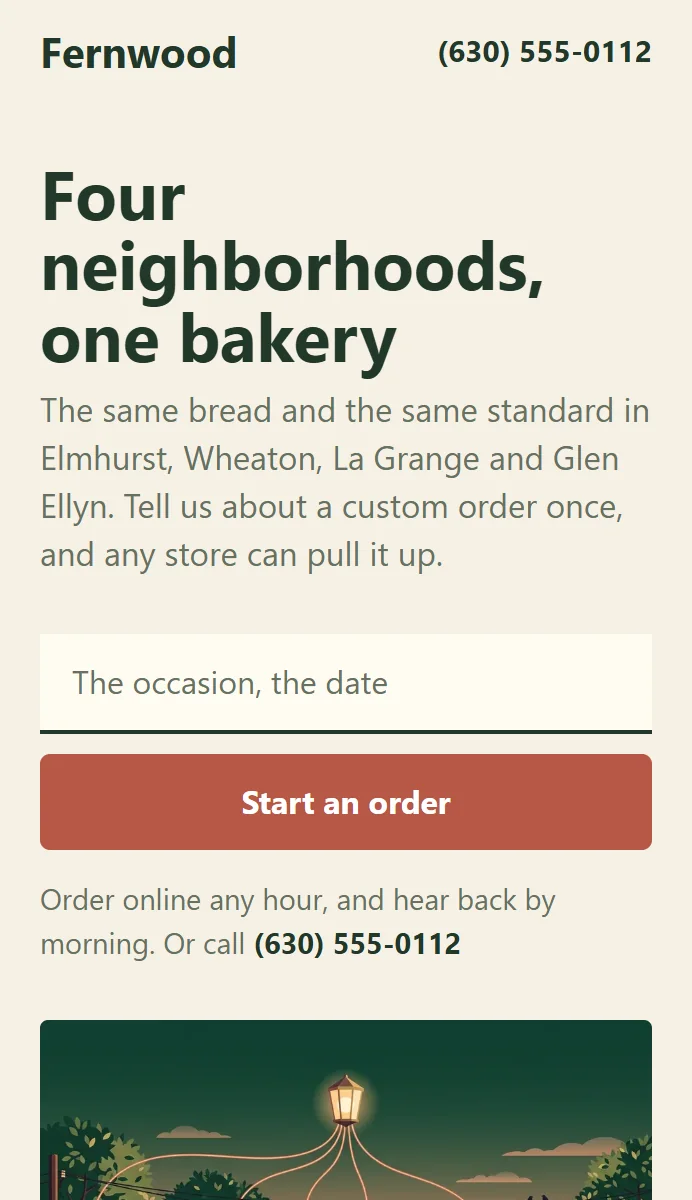
A custom cake order goes to the one kitchen with the right pans and decorator, and every register works from that order. Fernwood is a company we invented, so we could build its website and back office in full.
Open the Fernwood buildOne record for every location
In the Fernwood Bakehouse build, a custom cake order goes to the one store with the right pans and baker, and every location works from that same order.
One edit, every listing
A structured record with each location’s address, hours, staff and services feeds the site and the tools that keep Google Business Profiles in sync.
Local control, brand intact
A local manager fixes their own holiday hours without touching the brand, and leads and bookings roll up per location into one view.

Where AI helps across locations
Review replies, drafted per location
Drafted responses wait for each manager’s approval, so the voice stays consistent without a central bottleneck.
Listings that stay in step
The same tooling flags when a listing’s hours stop matching the site, before a customer finds the difference.
Local answers
Questions like whether a given store offers a given service are answered from the location data, with a person signing off.

Each location runs its own day inside one brand
Discovery maps who controls what between the center and the locations, and which systems each one runs. The build is shaped to that structure.
Tell us how your locations share the work
A person reads every request and replies within one business day.
Start a project