Your tools should talk to each other
Most businesses run on good software that has never been introduced. We keep what works and build the layer that connects it.
Start a project
The stack you already run
Picture a shop that runs on Stripe, QuickBooks, Calendly and a CRM, with a spreadsheet for the customers the CRM missed. Each tool does its job well, and none of them knows the others exist.
The gap shows up as work. Someone copies the day’s appointments into the customer list, and at month end someone reconciles the calendar against the invoices. This page covers what changes once the tools start talking.

Information should be typed once, then reach every system that needs it
A new order or booking enters once, when it happens, and the connecting layer carries it to the books, the CRM, the calendar and the inbox without anyone touching it again.
Where the tools start talking
Four connections we build and maintain, each one removing a round of re-typing.




Website to CRM
A form fill or quote request becomes a customer record the moment it arrives, with the source and the service requested attached, so no lead goes cold in the wrong inbox.
Payments to books
When Stripe processes a charge, QuickBooks finds out. Sales and refunds post where they belong, so month-end close is a review of numbers that are already there.
Bookings to the customer record
A booked appointment updates the calendar and writes the job into the customer’s history, so the invoice already has the details when the work is done.
Events to your inbox
Confirmations and reminders go out from your own email, triggered by what happens in the system.
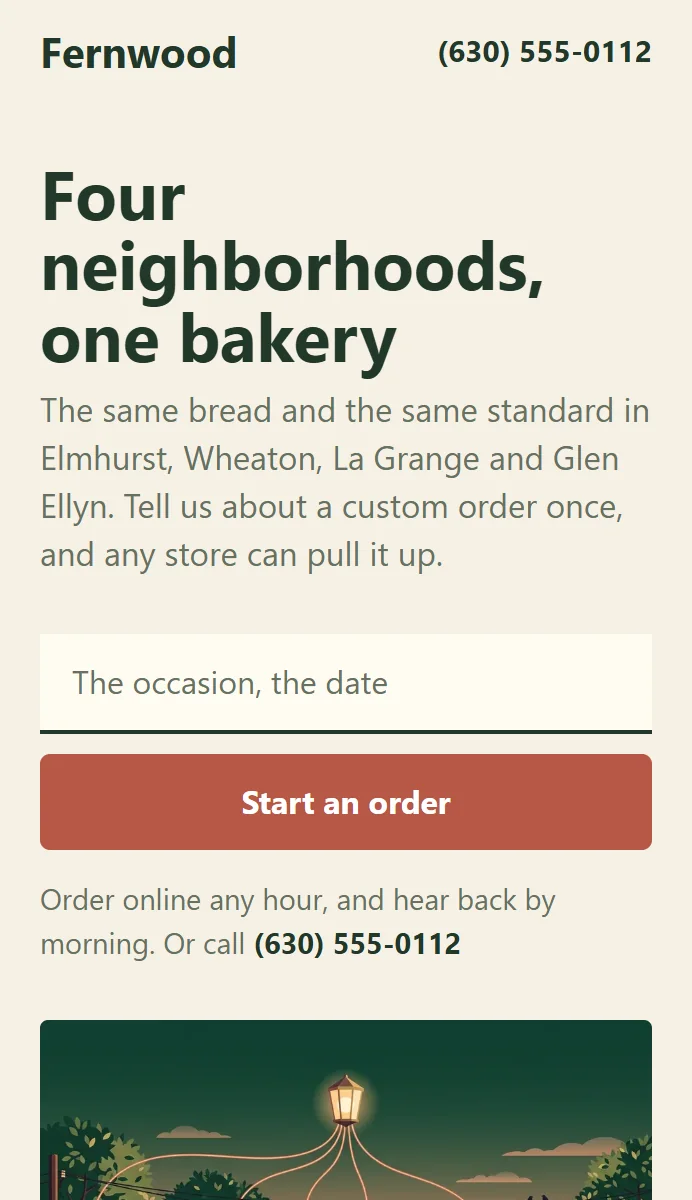
Fernwood Bakehouse
A custom cake order goes to the one kitchen with the right pans and decorator, and every register works from that order. Fernwood is a company we invented, so we could build its website and back office in full.
Open the Fernwood build
Keep what works
Connecting your tools doesn’t mean replacing them. If the tools you run are doing their jobs, they stay, and we build the layer between them, from syncs and webhooks to custom software that passes data along and flags anything that doesn’t match.
Where an off-the-shelf connection exists, we use it, and where it doesn’t, we build one. Integrations is the service behind this page, and every project starts with a scoping pass over the stack you have.
Questions

Do we have to change the tools we use?
What happens when a connection breaks?
How big a project is this?
Who looks after the connections once they’re built?
Tell us what you need built
A person reads every request and replies within one business day.
Start a project